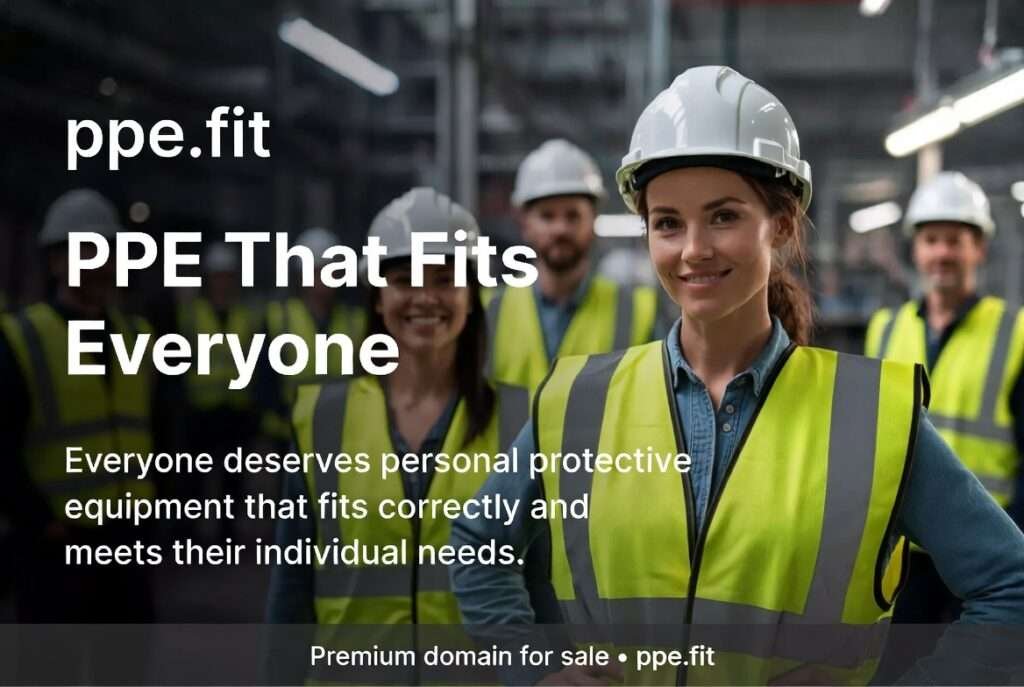
Personal protective equipment sits at the heart of any serious workplace safety effort. When risks can’t be fully eliminated through engineering controls or safer work practices, PPE steps in as a critical line of defence. It’s not just about ticking a compliance box; it’s about giving people the tools to do their jobs without unnecessary harm.
In practical terms, wearing ear protection in a noisy factory helps prevent hearing loss over years of exposure. On a construction site, a hard hat can make the difference between a minor bump and a serious head injury. In healthcare settings, respirators and gloves reduce the chance of infection transmission. PPE doesn’t stop every hazard, but when used correctly and as part of a broader safety strategy, it significantly lowers the likelihood of injury or illness.
Yet PPE rarely works in isolation. The preferred approach starts with eliminating the hazard entirely, then substituting less dangerous materials, engineering safer processes, implementing administrative controls such as training or job rotation, and finally relying on PPE when those earlier steps aren’t sufficient. This reflects a simple reality: no piece of equipment can fully compensate for poor risk assessment or inadequate hazard controls.
Different regions approach this balance in slightly different ways. In North America, OSHA emphasises employer responsibility to provide appropriate PPE and ensure its proper use, often alongside detailed hazard assessments. The EU framework, under the PPE Regulation (EU) 2016/425, places strong focus on product conformity and CE marking, while national laws handle workplace implementation. Australia and New Zealand align closely with international standards but adapt requirements to local industries such as mining and agriculture. In many parts of Asia-Pacific, Latin America, the Middle East, and sub-Saharan Africa, regulations may vary more widely, with some countries adopting ISO or EN standards directly while others rely on national guidelines that reflect local economic and industrial realities.
Regardless of location, one consistent thread runs through effective safety programs: PPE only delivers its intended protection when it’s the right equipment, properly fitted, correctly used, and maintained. Training plays a vital role here. Workers need to understand not just how to wear PPE but why it’s necessary. A respirator might offer excellent filtration, for example, but only if the wearer is clean-shaven and the seal is intact.
Employers also have a part to play beyond supplying equipment. Regular checks, fit testing where relevant, and clear policies on use help ensure PPE remains effective. In some industries, such as healthcare or chemical handling, these checks become especially important because the consequences of failure can extend beyond the individual worker.
For anyone responsible for workplace safety, the message is clear: PPE forms an essential piece of the puzzle, but it works best when integrated thoughtfully into a comprehensive approach. Taking time to assess hazards properly, select suitable equipment, and support workers with training and supervision can make a meaningful difference in outcomes.
Feel free to share your thoughts or experiences with PPE in the comments – what challenges have you faced when integrating it into your safety programs?
Legal Disclaimer
The information provided in this post is for general guidance only and does not constitute legal, professional, or medical advice. Regulations, standards, and best practices for personal protective equipment vary by jurisdiction and industry, and they may change over time. Readers should consult qualified professionals, relevant regulatory authorities (such as OSHA in the US, the Health and Safety Executive in GB/NI, or equivalent bodies elsewhere), and current legislation before making decisions about PPE selection, use, or compliance. PPE Media Ltd (ppe.org) accepts no liability for any loss, injury, or damage arising from reliance on this content. Always verify product suitability and certification directly with manufacturers or authorized representatives.
Useful Links
- Hierarchy of Controls – NIOSH (US): https://www.cdc.gov/niosh/topics/hierarchy/default.html
- PPE Overview – OSHA (US): https://www.osha.gov/personal-protective-equipment
- PPE Regulation (EU) 2016/425: https://eur-lex.europa.eu/legal-content/EN/TXT/?uri=CELEX:32016R0425
- PPE at Work Regulations – HSE (GB): https://www.hse.gov.uk/ppe/ppe-regulations-2022.htm
- ISO Standards Overview: https://www.iso.org/osh/ppe-personal-protective-equipment